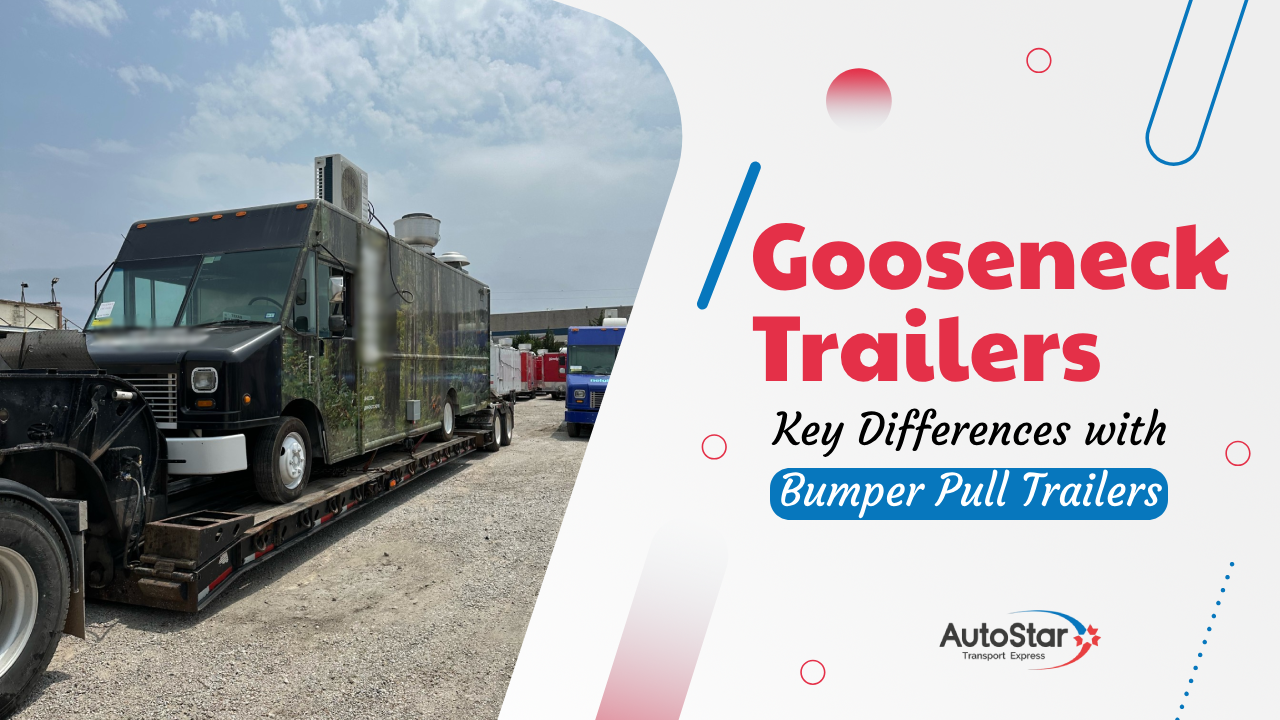
When it comes to towing heavy loads, choosing the right trailer is essential for safe and efficient vehicle transport. Whether you’re moving trucks, SUVs, or other valuable vehicles, selecting the appropriate trailer can ensure a smooth transport process. For auto transport companies, gooseneck trailers and bumper pull trailers are two popular options that serve different needs.
In this blog, we’ll explore the features of gooseneck trailers, their benefits for auto transport, and how they compare to bumper pull trailers, helping you decide which option best suits your transport requirements.
Key Highlights:
- Gooseneck trailers can handle heavy loads (over 30,000 pounds) and offer better stability and reduced swaying, making them ideal for auto transport companies.
- Bumper pull trailers are simpler to hook up and suitable for lighter loads (2,000 to 12,000 pounds), compatible with a wider range of vehicles.
- Choose a gooseneck for frequent heavy hauling and stability, or a bumper pull for convenience with lighter, occasional use.
What is a Gooseneck Trailer?
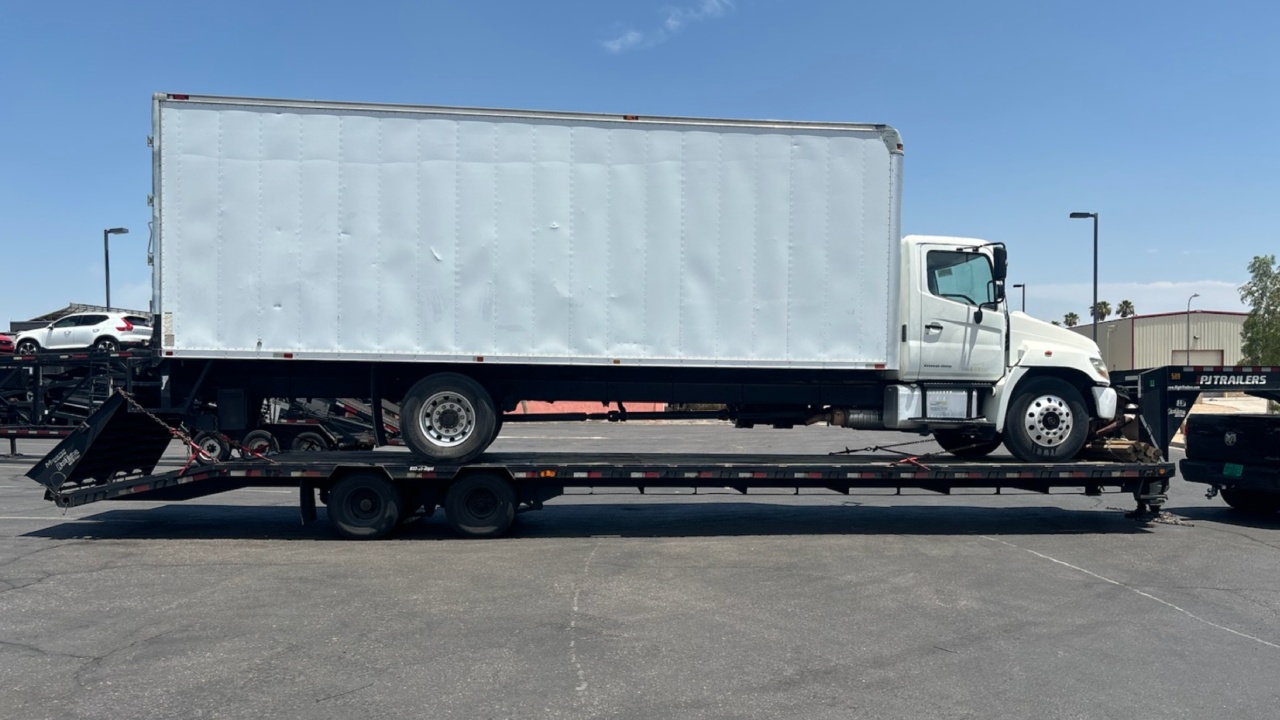
A gooseneck trailer is a type of trailer that attaches to a truck via a coupler mounted in the bed of the truck. This design allows for a greater weight distribution and improved stability when towing. Gooseneck trailers are often used for transporting heavy machinery, livestock, and large cargo.
Benefits of Gooseneck Trailers
- Weight Capacity: Gooseneck trailers can typically carry loads exceeding 30,000 pounds, making them ideal for heavy-duty applications such as construction and agriculture.
- Stability: The design of the gooseneck hitch reduces swaying, providing a smoother towing experience.
- Versatility: Available in various configurations, including flatbed, enclosed, and specialized designs for specific loads.
Gooseneck Trailer: Pros and Cons
Pros
- Enhanced Stability: Offers superior stability while towing heavy loads.
- Increased Weight Capacity: Can handle more weight compared to bumper pull trailers.
- Better Maneuverability: Allows for sharper turns without risking jackknifing.
- Versatile Uses: Ideal for various applications, from farming to hauling.
- Improved Towing Safety: A lower center of gravity reduces swaying.
Cons
- Requires a Compatible Vehicle: Not all vehicles can tow gooseneck trailers.
- Higher Initial Cost: Generally more expensive than bumper pull trailers.
- Complex Setup: Installation of the gooseneck hitch can be complicated.
- Limited Availability: Fewer options are available in some areas.
- Less Versatile for Light Loads: Overkill for smaller, lighter items.
What is a Bumper Pull Trailer?

Bumper pull trailers, also known as conventional trailers, attach to the hitch at the back of the towing vehicle. This design is more straightforward and often easier to handle for lighter loads.
Benefits of Bumper Pull Trailers
- Weight Capacity: Typically lower than gooseneck trailers, with capacities ranging from 2,000 to 10,000 pounds.
- Simplicity: The hitching mechanism is simple and easy to use, making it accessible for casual users.
- Wide Availability: Bumper pull trailers are widely available in various types, including travel trailers, utility trailers, and horse trailers.
Bumper Pull Trailer: Pros and Cons
Pros
- Ease of Use: Simple hook-up and disconnect process, perfect for casual users.
- Affordability: Generally cheaper than gooseneck trailers, making them budget-friendly.
- Wider Compatibility: Can be towed by most vehicles, including smaller trucks and SUVs.
- More Availability: Easier to find and purchase, especially in urban areas.
- Versatile for Light Loads: Ideal for small, lightweight hauls, making them more flexible for personal use.
Cons
- Less Stability: More prone to swaying, especially with heavy loads or in windy conditions.
- Lower Weight Capacity: Not as suitable for hauling heavy equipment or livestock as gooseneck trailers.
- Limited Maneuverability: Harder to make tight turns, increasing the risk of jackknifing.
- Reduced Towing Safety: A higher center of gravity can lead to more challenges with load balance.
- More Strain on Vehicle: This tends to put more strain on the rear axle of the towing vehicle.
Gooseneck vs. Bumper Pull Trailer: Key Differences
| Feature | Gooseneck Trailer | Bumper Pull Trailer |
|---|---|---|
| Hitch Location | Over the truck bed (rear axle) | At the rear bumper |
| Weight Capacity | Up to 30,000+ pounds | Typically up to 10,000-12,000 pounds |
| Stability | More stable with less sway | Less stable; more prone to swaying |
| Maneuverability | Better for tight turns and backing up | Limited maneuverability |
| Size Options | Longer and wider options are available | Generally smaller and lighter |
Use Cases
- Gooseneck Trailers: Ideal for hauling heavy machinery, livestock, and large equipment in agricultural and construction settings.
- Bumper Pull Trailers: Suitable for lighter loads such as recreational vehicles or small utility tasks.
Choosing the Right Trailer for Your Needs
When deciding between a gooseneck trailer and a bumper pull trailer, consider the following factors:
- Weight of Cargo: If you plan to transport heavy loads regularly, a gooseneck trailer is likely your best option.
- Type of Vehicle: Ensure your towing vehicle can handle the weight and type of trailer you choose.
- Frequency of Use: For occasional use with lighter loads, a bumper pull trailer may be more convenient.
Conclusion
Both gooseneck and bumper pull trailers have their unique advantages, and the right choice depends on your specific needs. If you require high capacity and stability for heavy-duty hauling, a gooseneck trailer may be the way to go. However, for ease of use and lighter loads, a bumper pull trailer can be a practical choice. Consider your hauling requirements, vehicle compatibility, and personal preferences to make the best decision.
Frequently Asked Question
What are the main differences between a gooseneck trailer and a bumper pull trailer?
Gooseneck trailers attach to a ball hitch located in the truck bed, allowing for better weight distribution and maneuverability, while bumper pull trailers connect to a hitch mounted on the rear of the towing vehicle, making them easier to attach and detach.
How does the stability of a gooseneck trailer compare to a bumper pull trailer?
Gooseneck trailers offer superior stability due to their hitch location, which lowers the center of gravity and reduces swaying, making them ideal for towing heavy loads over long distances compared to bumper pull trailers.
What are the weight capacity limits for gooseneck trailers?
Gooseneck trailers typically have a weight capacity ranging from 10,000 to 30,000 pounds, depending on the design and materials used, making them suitable for heavy-duty hauling.
How does the hitch design of a gooseneck trailer affect its performance?
The gooseneck hitch design allows for tighter turning radiuses and improved weight distribution, which enhances towing performance and reduces the risk of jackknifing compared to traditional bumper pull hitches.
What are the advantages of using a gooseneck trailer for heavy-duty hauling?
Gooseneck trailers provide enhanced stability, higher weight capacity, and better maneuverability for heavy-duty hauling, making them a preferred choice for transporting large equipment, vehicles, or cargo.
Can all vehicles tow a gooseneck trailer?
No, not all vehicles can tow a gooseneck trailer. A compatible truck with a gooseneck hitch installed in the bed is required for safe towing, which limits options compared to bumper pull trailers that can be towed by a wider range of vehicles.
What types of loads are best suited for gooseneck trailers?
Gooseneck trailers are ideal for heavy loads such as livestock, construction equipment, and multiple vehicles, making them suitable for various applications in agriculture, construction, and auto transport.
Are gooseneck trailers easier or harder to maneuver than bumper pull trailers?
While gooseneck trailers offer better stability and handling during towing, they can be more challenging to maneuver in tight spaces due to their longer length. Bumper pull trailers generally provide easier maneuverability for short-distance towing.