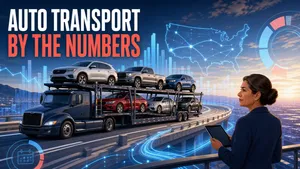
The auto transport industry has seen remarkable advancements and navigated various challenges in recent years. As a sector known for its adaptability and eagerness to embrace innovation, 2025 is poised to introduce cutting-edge developments that will redefine car shipping.
The auto transport industry continues to evolve with new technologies and changing market dynamics. In 2025, key trends include advancements in AI and shifts in the car shipping landscape, influencing the future of vehicle transportation.
Key Highlights
- AI optimizes route planning, enhances safety, and automates scheduling, while IoT improves real-time tracking and vehicle monitoring.
- The shift toward EVs and self-driving trucks reduces emissions, lowers operational costs, and enhances road safety.
- Blockchain ensures secure transactions, GPS tracking prevents theft, and digital marketplaces streamline vehicle shipping.
- Green transport initiatives, alternative fuels, and stricter regulations drive industry evolution while ensuring efficiency and environmental responsibility.
AI Advancements Transforming Auto Transport
Artificial Intelligence (AI) is revolutionizing auto transport by automating tasks, improving efficiency, and enhancing safety. Key AI contributions include:
- Optimized Route Planning: AI-powered navigation systems analyze traffic and road conditions in real-time, reducing delays and ensuring timely deliveries.
- Enhanced Safety & Cost Reduction: AI minimizes human errors, reducing accident risks, lowering insurance premiums, and improving safety.
- Predictive Vehicle Maintenance: AI detects potential mechanical issues before they occur, preventing breakdowns and service disruptions.
- Automated Scheduling & Dispatching: AI optimizes the pickup and delivery process, reducing idle time for carriers and improving operational efficiency.
- Proactive Problem-Solving: Deep learning algorithms allow AI to detect issues early and resolve them quickly, benefiting both transport companies and customers.
With AI driving these innovations, the auto transport sector is evolving into a more efficient, reliable, and technology-driven industry.
The Role of IoT in Auto Transport
The Internet of Things (IoT) is reshaping auto transport by connecting vehicles and logistics systems to a network of sensors, providing real-time data that enhances decision-making and safety:
- Data-Driven Decision Making: IoT sensors track metrics such as speed, temperature, and driver rest periods, helping optimize vehicle performance and operations.
- Improved Customer Communication: Real-time data allows transport companies to provide accurate delivery estimates, enhancing transparency and customer satisfaction.
- Enhanced Safety: IoT systems monitor fatigue levels and driving conditions, reducing the risk of accidents caused by driver fatigue or unsafe driving conditions.
By leveraging IoT, auto transport companies improve operational efficiency, safety, and customer service.
The Future of Electric & Autonomous Transportation in Auto Transport
Electric and autonomous vehicles are at the forefront of transforming the auto transport industry:
- Eco-Friendly Advancements: Electric transport vehicles significantly reduce carbon emissions, contributing to a more sustainable and environmentally responsible industry.
- Enhanced Road Safety: Autonomous vehicles reduce human errors, minimizing accidents and improving road safety.
- Lower Operational Costs: Electric and self-driving trucks reduce fuel and maintenance costs, offering more efficient transport options.
- Adaptive AI & Sensor Technology: Autonomous vehicles use AI-driven sensors and LiDAR systems to navigate roads safely, avoiding obstacles and making precise decisions.
- Gradual Industry Adoption: While fully autonomous vehicle transport is still in development, current advancements in assisted driving technology and automated logistics are paving the way for a safer and more efficient future.
Blockchain Technology in Auto Transport
Blockchain is revolutionizing auto transport by enhancing transparency, security, and efficiency in vehicle shipping transactions:
- Improved Data Security: Blockchain technology prevents data tampering, ensuring accurate documentation of shipments, contracts, and transactions.
- Smart Contracts: Automated agreements streamline payments and reduce disputes between shippers and carriers.
- Fraud Prevention: Blockchain minimizes fraudulent activities by providing an immutable record of each transaction.
By integrating blockchain, the auto transport industry enhances trust, efficiency, and operational security.
The Rise of Digital Marketplaces in Auto Transport
The auto transport sector is increasingly embracing digital marketplaces to connect carriers, brokers, and customers more efficiently:
- Seamless Booking & Pricing: Online platforms allow customers to compare rates, book services instantly, and track shipments in real-time.
- Better Carrier Connectivity: Digital marketplaces help transport companies optimize routes and fill empty truck spaces.
- Increased Transparency: Customers gain greater insight into pricing structures and service quality before booking a shipment.
As technology advances, digital marketplaces are streamlining the entire auto transport process, making it more customer-friendly and efficient.
Enhanced Visibility & GPS Anti-Theft Technology in Auto Transport
Advanced tracking and GPS technologies are improving security and operational efficiency in the auto transport sector:
- Real-Time Location Monitoring: GPS tracking systems offer live updates on vehicle locations, improving delivery accuracy and providing customers with timely updates.
- Anti-Theft Technology: GPS-powered anti-theft systems help detect unauthorized access or theft, enabling quick responses and enhancing vehicle security.
- Route Optimization: GPS tracking ensures efficient route planning, reducing fuel consumption and optimizing delivery times.
Transport Management Systems (TMS) & Advanced Load Matching (ALM) in Auto Transport
Transport Management Systems (TMS) and Advanced Load Matching (ALM) are essential tools for optimizing auto transport operations:
- TMS: Streamlines the management of drivers, inventory, and shipment tracking, providing valuable insights that improve operational efficiency and reduce costs.
- ALM: Matches vehicles with suitable fleet resources, improving load distribution and reducing empty miles, which enhances efficiency and lowers costs.
Together, TMS and ALM technologies help auto transport companies optimize their operations, reduce waste, and improve service quality.
Sustainable Initiatives & Green Auto Transport Trends
Environmental sustainability is becoming a priority in the auto transport industry, with companies adopting eco-friendly practices:
- Carbon-Neutral Shipping: Carriers are investing in carbon offset programs to minimize their environmental impact.
- Alternative Fuels: The use of biofuels, hydrogen-powered trucks, and electric vehicles is growing.
- Eco-Conscious Logistics: Route optimization and load consolidation strategies reduce fuel consumption and emissions.
These sustainability efforts are shaping a greener and more responsible future for vehicle transport.
Increased Focus on Regulatory Compliance in Auto Transport
Regulatory compliance has become a key trend in the auto transport industry, driven by ongoing changes in federal, state, and local laws. Adapting to these regulatory changes ensures smoother operations, minimizes legal risks, and promotes safer working conditions within the industry.
Key Auto Transport Industry Statistics for 2025
- The demand for auto transport services is steadily increasing as supply chains stabilize post-pandemic.
- The truck driver shortage is projected to surpass 100,000 in 2025, further impacting delivery efficiency and operational costs.
- The auto transport market is expected to exceed $11.5 billion in 2025, reflecting the steady expansion of vehicle logistics and shipping services.
- The rise of electric and autonomous vehicle transport is reshaping the industry, influencing infrastructure and regulatory developments.
With increasing competition and technological advancements, the number of auto transport businesses in the U.S. is expected to grow, further diversifying service offerings.
Frequently Asked Questions
How is 5G technology impacting auto transport?
5G enhances real-time tracking, automated dispatching, and IoT connectivity, improving efficiency and security in vehicle shipping.
What cybersecurity risks come with AI in auto transport?
AI-driven logistics face risks like hacking and data breaches, but encryption and blockchain security help protect sensitive information.
Will drones be used in auto transport?
Drones are being tested for vehicle inspections, route monitoring, and security surveillance, improving efficiency in logistics.
Are self-driving trucks already in use?
Semi-autonomous trucks are operational, but full automation is still in testing due to safety and regulatory challenges.
How does big data improve auto transport?
Big data helps optimize routes, reduce costs, and predict demand, leading to better efficiency and customer service.
What sustainability trends are shaping auto transport?
Companies are adopting EV carriers, biofuels, and carbon offset programs to reduce emissions and meet green logistics goals.
What are digital freight matching platforms?
These platforms connect shippers with carriers instantly, reducing empty miles, cutting costs, and streamlining bookings.
How is customer experience evolving in auto transport?
AI chatbots, real-time tracking, and automated booking systems provide faster updates and greater transparency.
What challenges will auto transport face in 2025?
Driver shortages, rising fuel costs, evolving regulations, and cybersecurity threats are key industry challenges.
Will traditional car shipping methods become obsolete?
No, automation improves efficiency, but human oversight remains essential for safety, logistics, and customer service.